Bin fill-level monitoring
Collect bins when they're full, not when the schedule says.
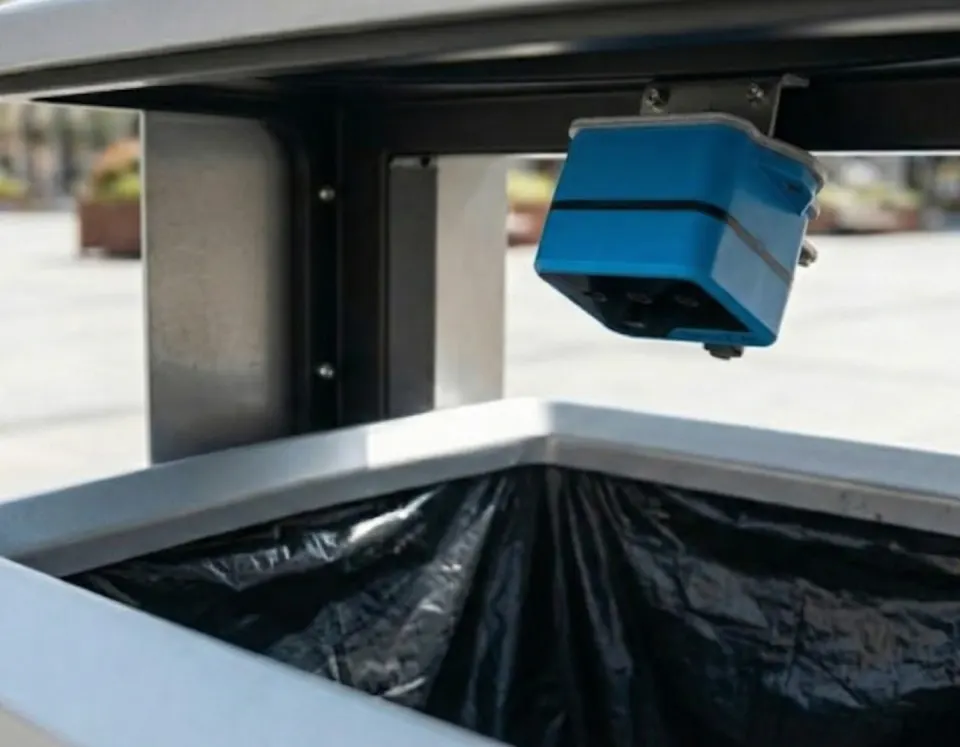
SensZ Eye tracks fill levels across distributed litter bins and flags overflows with a photo, so waste collection follows need instead of a fixed route. Battery and 4G, no wiring.
The problem
Fixed collection schedules empty half-full bins and miss full ones.
On a fixed schedule, crews empty bins that are half full while others overflow between rounds. Overflowing bins bring complaints, litter and pests, and the wasted trips cost fuel and time.
- Trucks and crews visit bins that don't need emptying
- Overflows are found by the public before the team
- No record of which bins were full, and when
How it works
Four steps from install to verified fix.
Mount it above the bin
Fix the sensor to a wall, pole or frame overlooking one or more bins. Battery and 4G mean no cabling and no site network.
Take a reference photo
Capture the bin area as it should look, and say what to watch for: a bin reaching full, waste spilling over, or litter around it.
Fill levels on a live map
At set times it checks each bin and reports its fill level to the dashboard, so the team sees every monitored bin on one map.
Route by need, then verify
Full and overflowing bins become tasks with a photo for the right crew. The next check confirms the bin was emptied.
What it watches
Ready-made conditions to start with.
From the SensZ Eye facility library. Anything else you can see and describe in a sentence can usually be watched too. Browse the full library.
| Code | Condition | What it watches | Why it matters |
|---|---|---|---|
| CLN-01 | Full rubbish bin | Bin reaching full / near-full level | Reduces unnecessary bin checks and prevents overflow |
| CLN-02 | Overflowing rubbish bin | Waste extending outside bin | Faster cleaning response and better appearance |
| CLN-03 | Litter on floor | Bottles, paper, cups, packaging, debris | Keeps common areas clean with less manual patrol |
| PST-07 | Waste attracting pests | Food/waste accumulating | Early preventive action |
| CLN-25 | Loading bay cleanliness | Waste, pallets, debris left behind | Improves operational areas |
Why SensZ Eye
Why a camera sensor for bins
Sees more than a fill level
A camera spots waste piled beside the bin and litter around it, not just how full the bin is.
Proof the bin was emptied
The check after each collection confirms the job was done, with a photo for your records or your contractor.
No wiring, quick to move
Battery and 4G mean it can go on any street bin, and move to a new hotspot in minutes.
One sensor, many jobs
The same device can watch a bin today and a drain, a loading bay or a fire exit tomorrow.
Results
Fewer overflows, fewer wasted trips
Waste collection
Before: Fixed schedules meant some bins overflowed while others were emptied half full.
After: Fill-level alerts and the dashboard let the team plan routes by need, improving service without adding headcount.
15–30%Lower collection costs, reported by customers
Read the case studies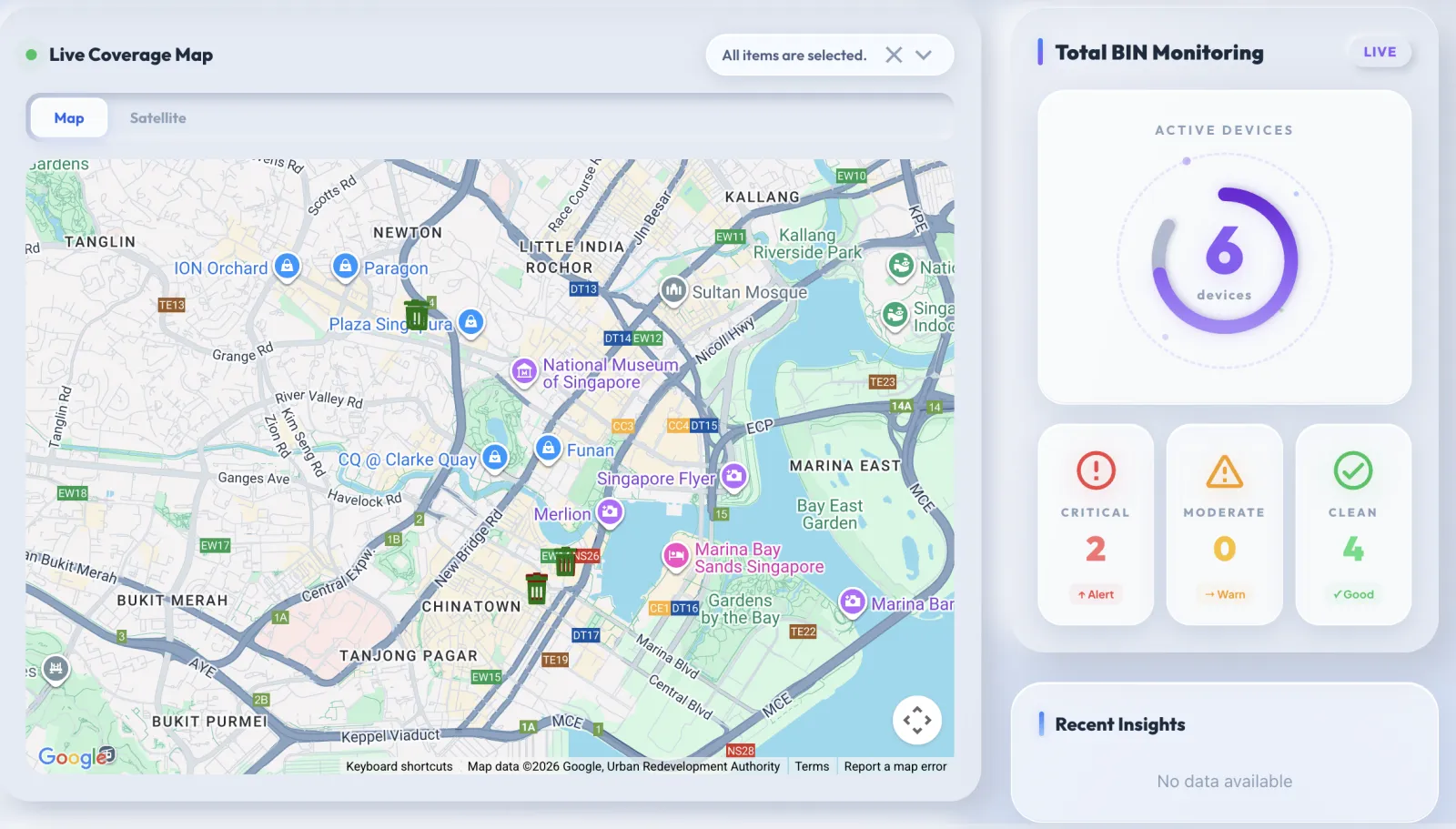
How does SensZ Eye know a bin is full?
It compares each check with a reference photo of the bin and reports when the bin reaches full or near-full, and when waste is spilling outside it. Every alert comes with a photo.
Can we plan collection routes with it?
Yes. Fill levels for every monitored bin appear on the dashboard's live map, so the team can plan routes around the bins that actually need emptying.
Does it work for indoor bins too?
Yes. The same sensor watches bins in lobbies, food courts, washrooms and loading bays, as well as street and park litter bins.
Does it need power or Wi-Fi?
No. It runs on battery and 4G, so there's no wiring or site network. Battery life and full specifications are in the datasheet, available on request.
Does it record video of people using the bins?
No. SensZ Eye reports conditions and events, with a photo attached to each alert as evidence. Nothing is streamed for people to watch.
How do we start?
Most teams start with a 6 to 8 week pilot of 8 to 12 sensors on their busiest or most complained-about bins, measured against their current schedule. Pricing depends on sensor count, workflows and service level.
Let's put eyes on your operation.
We'll bring the sensor. You bring the condition worth watching.