Drain water level monitoring
Drain water level monitoring, without the rainy-season rounds.
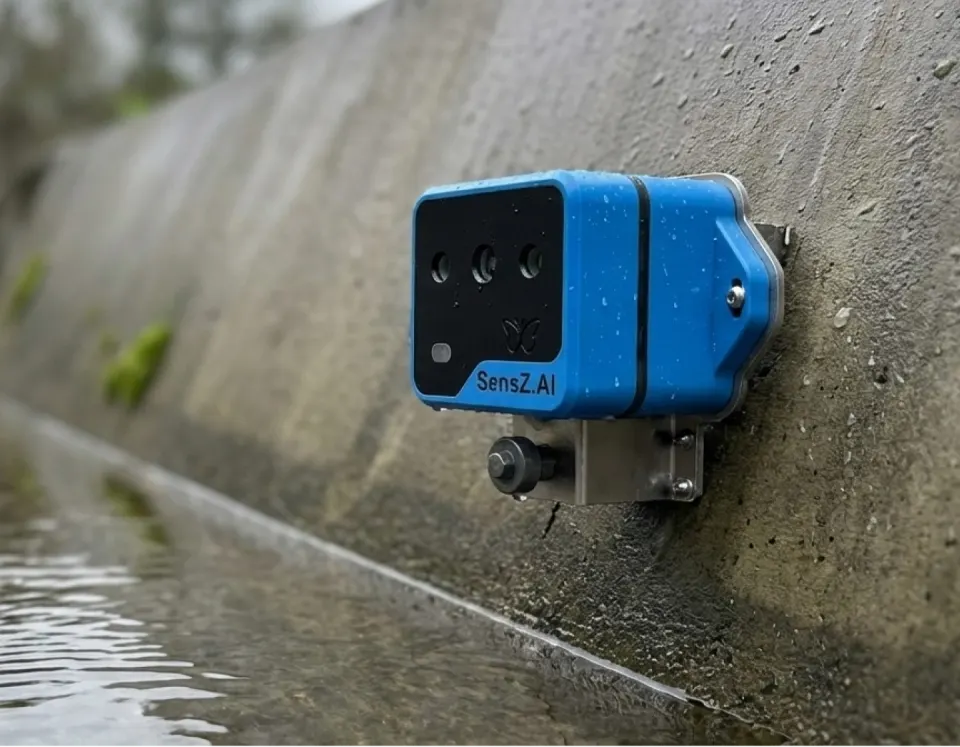
SensZ Eye watches drain chambers, culverts and sump pits, and alerts the right crew with a photo when water stays high. It runs on battery and 4G, so it goes where there's no power and no network.
The problem
Most drain checks find nothing. The one that matters gets missed.
Councils and campus teams send crews round drain chambers every rainy season, and most of those visits find drains that are fine. Meanwhile a blocked grate or a rising chamber elsewhere goes unseen until it floods.
- Crews drive to drains that turn out to be fine
- Blockages and rising water are found late, often by the public
- Little evidence of what was checked, when, and what was found
How it works
Four steps from install to verified fix.
Mount it over the drain
Fix the sensor to a drain wall, culvert or pole with a bracket or adhesive. No power cable, no drilling for wiring and no site network.
Take a reference photo
Capture how the drain looks when it's normal, and say in a sentence what to watch for, such as water above a marked level or debris covering the grate.
It checks, day and night
At set times it takes a new picture and compares it with the reference. Camera, time-of-flight and low-light sensors keep it working after dark.
Alerts only when water stays high
Persistent-threshold alerts ignore a passing surge. When the level stays high, the right crew gets a task with a photo, and the next check confirms the drain has cleared.
What it watches
Ready-made conditions to start with.
From the SensZ Eye facility library. Anything else you can see and describe in a sentence can usually be watched too. Browse the full library.
| Code | Condition | What it watches | Why it matters |
|---|---|---|---|
| MNT-30 | Drain overflow | Water rising/overflowing around drain | Early flood response |
| MNT-29 | Obstructed drain | Debris covering floor drain | Prevents local flooding |
| MNT-31 | Sump pit level | Abnormal visible water level | Reduces manual checks |
| PST-11 | Insect breeding risk | Standing water visible | Preventive mosquito control |
| PST-12 | Drain pest activity | Visible activity around drains | Supports targeted treatment |
Why SensZ Eye
Why a camera sensor for drains
Goes where fixed sensors can't
Battery and 4G mean no trenching for power and no network to install at each chamber.
A photo with every alert
Crews see the drain before they drive out, and every event leaves photo evidence for audit trails and incident reports.
Fewer false alarms
Alerts fire only when the level stays high, so a short shower doesn't send a crew out.
Re-tasked in minutes
Move a sensor to a new hotspot, or change what it watches, without new hardware.
Results
Flood risk spotted earlier
Municipal drainage
Before: Crews spent rainy seasons checking drain chambers that were usually fine.
After: Sensors on high-risk drains alert only when water stays high, so crews go where they're needed and every visit has photo evidence.
70%Less routine field work, reported by customers
Read the case studies
How does SensZ Eye monitor drain water levels?
It compares each check with a reference photo of the drain and reports water-level readings with a photo attached. Its sensing combines camera, time-of-flight and low-light sensors, so it keeps working day and night.
Will a short downpour trigger an alert?
No. Alerts use a persistent threshold: the team is alerted only when water stays high, not when it rises briefly and drains away.
Does it need power or a network at the drain?
No. It runs on battery and 4G. Mount it with a bracket or adhesive and move it in minutes. Battery life and full specifications are in the datasheet, available on request.
Can it also spot blocked grates and standing water?
Yes. The same sensor can watch for debris covering a drain, sump pit levels, and standing water that becomes a mosquito breeding risk.
Does it record video of the public?
No. SensZ Eye reports conditions and events, with a photo attached to each alert as evidence. Nothing is streamed for people to watch.
How do we start?
Most teams start with a 6 to 8 week pilot of 8 to 12 sensors on their highest-risk drains, measured against their current inspection rounds. Pricing depends on sensor count, workflows and service level.
Let's put eyes on your operation.
We'll bring the sensor. You bring the condition worth watching.